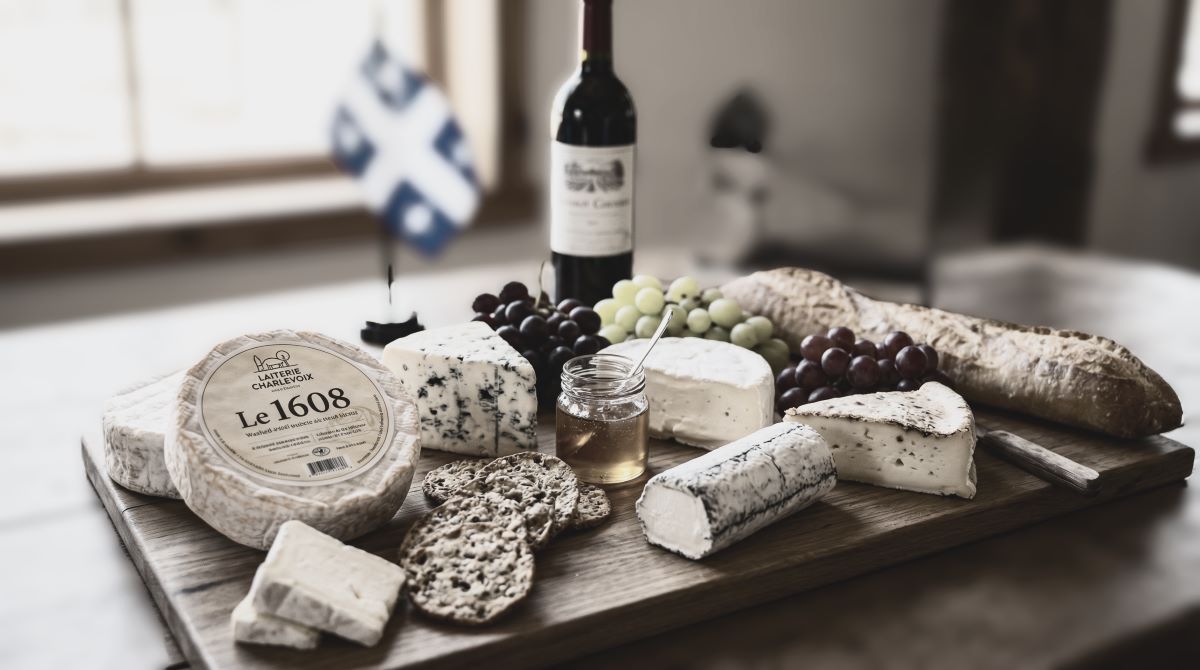
While France rested on centuries of tradition and the rest of North America was still sorting mild from sharp, something remarkable was taking shape in the rural farmlands of Quebec.
Over the past four decades, Quebec transformed itself from a province of industrial cheese production into one of the most dynamic and respected cheesemaking regions in the world. Today, with over 700 artisan cheeses crafted by more than 100 fromageries, Quebec produces more cheese varieties than any other region in Canada and rivals many European countries in quality and innovation.
This wasn't overnight success. It was a quiet revolution, built on passion, persistence, and a marriage of Old World technique with New World creativity.
The Seeds of Revolution
The story begins in the 1980s, when a handful of passionate cheesemakers decided to challenge the status quo. Quebec's dairy industry was dominated by large-scale industrial production, churning out blocks of orange cheddar and mild mozzarella for the North American market.
But a few visionaries looked across the Atlantic and asked a simple question: if European farmstead cheesemakers could create hundreds of distinctive cheeses using traditional methods, why couldn't Quebec?
These pioneers faced real obstacles. Health regulations were designed for industrial production, not small-batch artisan work. Raw milk cheeses were heavily restricted. And convincing consumers to pay premium prices for local cheese when imported European varieties carried all the prestige seemed nearly impossible.
Yet they persevered. Fritz Kaiser established Fromagerie Kaiser in 1977, crafting raclette using Swiss techniques. In 1980, the Gosselin family founded Fromagerie du Champ à la Meule, focusing on traditional Quebec terroir. By the late 1980s, Fromagerie Le Détour was experimenting with washed-rind cheeses that would eventually rival their French counterparts.
The Perfect Storm of Terroir
Quebec's geography turned out to be a secret advantage. The province offers something most cheesemaking regions can only dream of: extraordinary diversity in climate, soil, and vegetation across a compact area.
The rolling hills of the Eastern Townships provide lush pastures reminiscent of the French countryside. The Charlevoix region, with its maritime climate and mineral-rich soil, produces milk with distinctive minerality. The flatter farmlands of Montérégie offer abundant grazing land for larger herds.
This diversity means Quebec cheesemakers can create an astonishing range of styles, from Alpine-inspired tommes to creamy bloomy-rind beauties, from robust blues to delicate fresh chèvres. Each region imparts its own character, creating genuine terroir in Quebec cheese.
Old World Wisdom Meets New World Fearlessness
What makes Quebec's cheese revolution truly remarkable is how it balances tradition with innovation. Many Quebec cheesemakers trained in Europe, learning centuries-old techniques from French, Swiss, and Italian masters. They returned home with this knowledge and applied it with discipline.
But they didn't stop there. Quebec cheesemakers embrace experimentation in ways their European counterparts often won't. They've created entirely new cheese styles by blending techniques from different traditions. They've pushed aging processes further, developed unexpected flavour combinations, and aren't afraid to break rules when the results are delicious.
Take Oka, for instance. Originally created by Trappist monks in 1893 using a recipe similar to French Port-Salut, it became Quebec's first iconic cheese. Today's artisan makers have taken that foundation and run with it, creating countless variations on washed-rind styles that are distinctly Québécois.
Or consider Le Cendrillon from Fromagerie du Presbytère, a goat cheese rolled in vegetable ash that perfectly balances French technique with Quebec creativity. Or Alfred Le Fermier from Fromagerie La Station, an Alpine-style cheese that rivals the best Gruyères, but with its own unmistakable character.
The Raw Milk Revolution
One of the most significant developments in Quebec's cheese story has been the gradual acceptance and celebration of raw milk cheeses. While regulations remain stricter than in Europe, Quebec has found a middle path that prioritizes both safety and flavour.
Raw milk cheeses capture the essence of place in ways that pasteurized versions simply cannot. The native bacteria and enzymes present in raw milk create complex, layered flavours that tell the story of specific pastures, seasons, and herds.
Quebec's artisan cheesemakers have become masters at working with raw milk, producing cheeses that are not only safe but spectacularly delicious. The result is a growing collection of raw milk treasures that showcase what's possible when tradition, technique, and terroir align.
A Culture of Collaboration
Perhaps the most surprising aspect of Quebec's cheese revolution is the spirit of collaboration among makers. Unlike in Europe, where recipes are closely guarded secrets and competition is fierce, Quebec's cheesemakers freely share knowledge, help newcomers, and celebrate each other's successes.
This collaborative spirit has accelerated innovation and elevated the entire industry. New cheesemakers don't have to reinvent the wheel. They can learn from those who came before and build on that foundation.
Industry organizations like Les Fromages d'ici and the annual Grand Prix des Fromages Canadiens have created platforms for recognition and education, raising standards across the board.
Where to Start
If you're new to Quebec cheeses, here are a few classics that showcase the range and quality:
- Le 1608 from Laiterie Charlevoix — A firm, Alpine-style cheese with nutty, complex flavours that develop beautifully with age.
- Le Bleu d'Elizabeth — A creamy blue cheese with tangy, buttery flavours and gentle earthy notes that make it approachable yet full of character.
- Le Riopelle de l'Isle — A triple-cream marvel with a bloomy rind, impossibly rich and luxurious.
- Grey Owl — An iconic goat cheese distinguished by its signature ash line and bright, lemony flavor that becomes richer and creamier as it ages.
- Chemin Brûlé — A rustic, surface-ripened goat cheese with a creamy texture and a pleasant balance of tangy freshness and earthy depth.
- Bête à Séguin — A soft cheese offering a clean, fresh flavor with a subtle nuttiness.
- 14 Arpents — A smooth cow's milk cheese with mild, buttery notes and a hint of nuttiness.
- Paillot de Chèvre — A delicate goat cheese with a creamy, slightly crumbly texture and fresh tangy flavor, traditionally wrapped in a charming rustic presentation.
Quebec's quiet revolution reminds us that greatness doesn't always announce itself with fanfare. Sometimes it happens in small batches, in rural fromageries, by people who simply refuse to compromise on quality. And the result? Some of the finest cheeses you'll find anywhere in the world.
Your April Challenge
Visit us at Farmhouse Artisan Cheese, and we'll be delighted to guide you through Quebec's incredible cheese landscape. We carry a carefully curated selection that showcases both time-honored classics and exciting new makers pushing boundaries.
Pick one Quebec cheese you've been curious about. Ask Laure or Stéphane about its story. Take it home, let it come to room temperature, and taste what a quiet revolution can accomplish.